
Karya
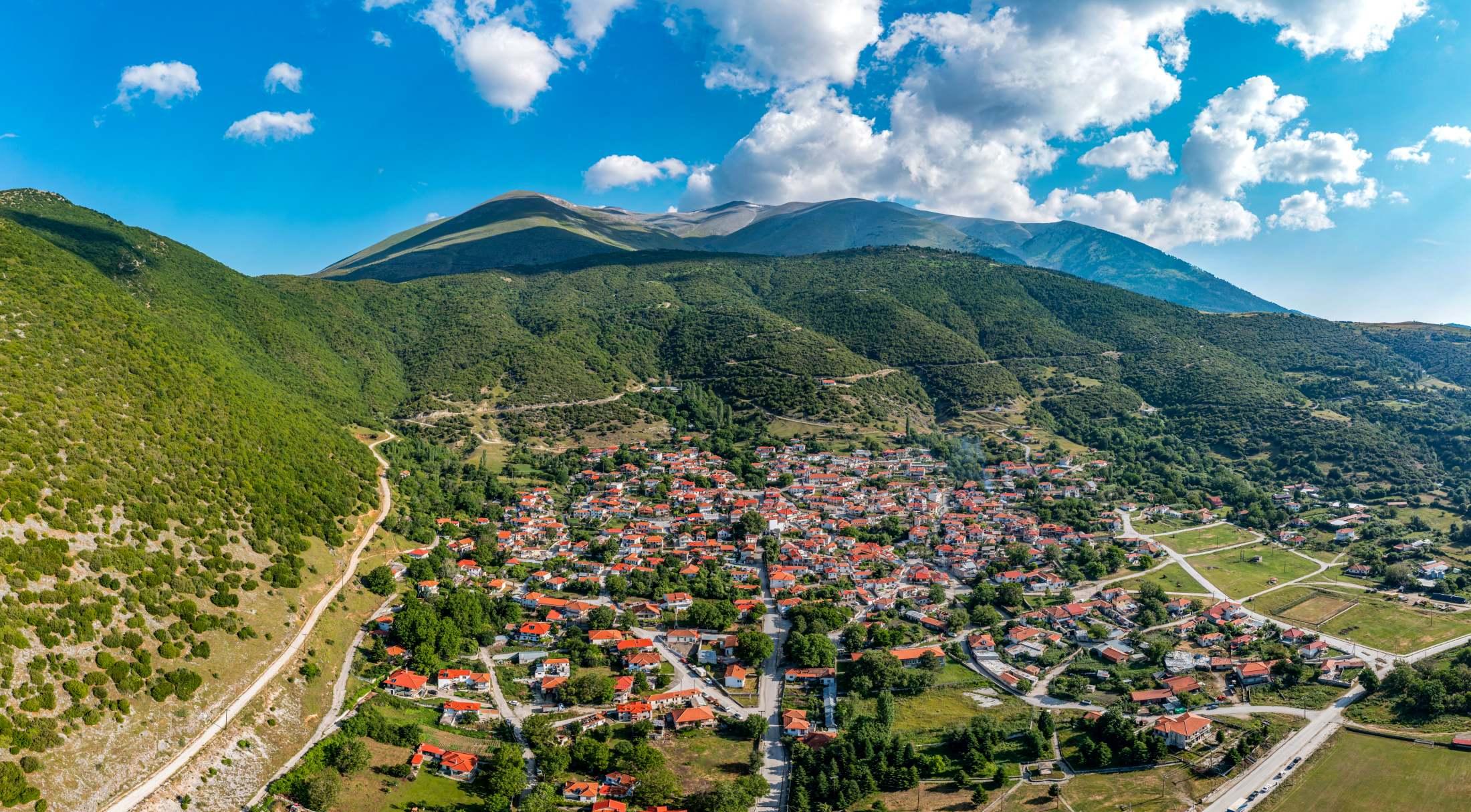
Karya village is cradled in a nook on Lower Olympus at an altitude of 900m and is a popular resort, due to its unique natural setting. It attracts a great number of visitors, who either stay in the area, or pass through Karya and the forests of Lower Olympus, on their way to the prefecture of Pieria and the beaches of Leptokarya. It is also the meeting point for climbers beginning their ascent to the peaks of Olympus: Metamorfosi 2,699m, Frangou t’ Aloni 2,677m and Ennea Pyrgoi 2,450m. North-east of the village there are woods with pine, fir, oak and beech trees covering 4,000 hectares.
Livadi
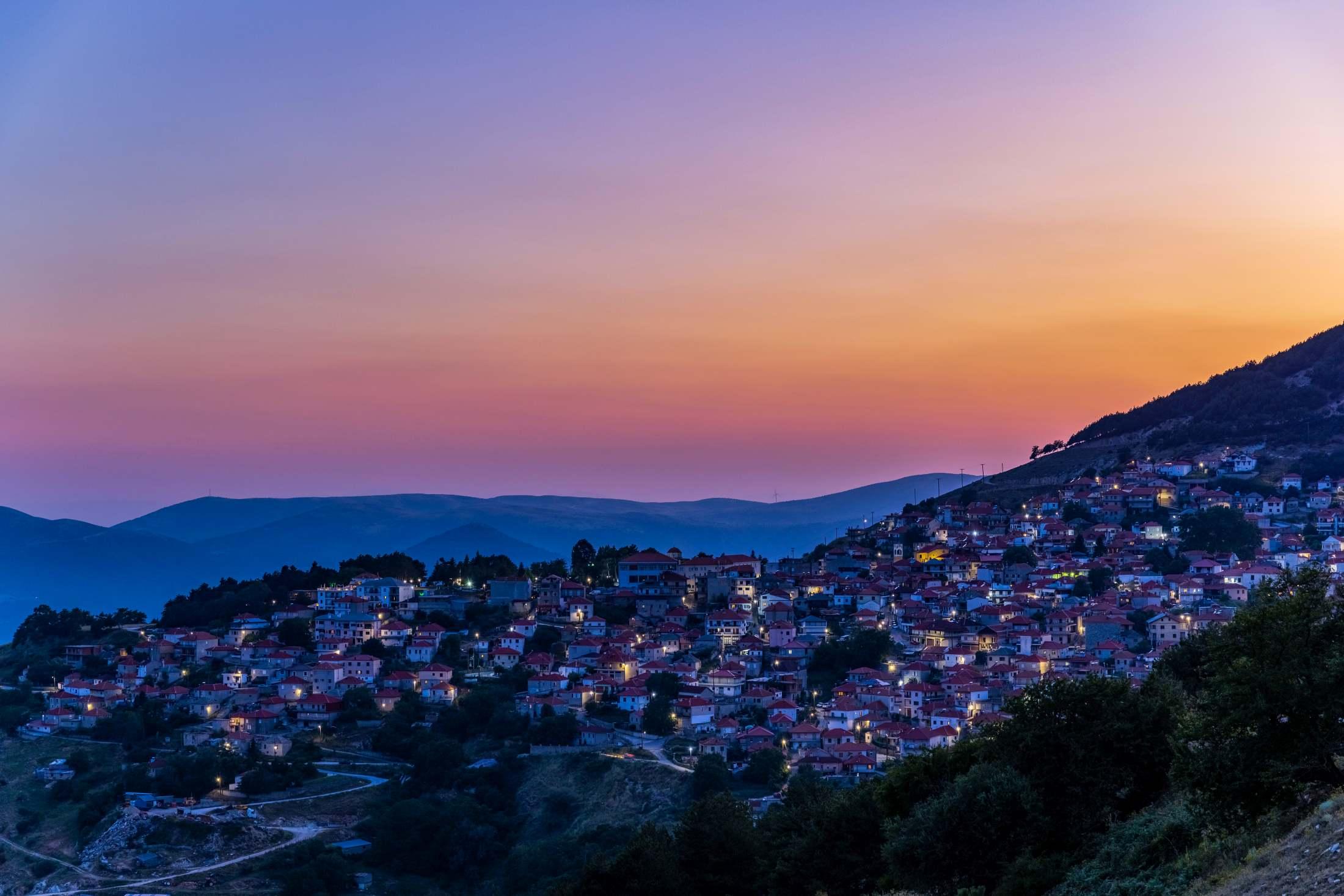
The historical village Livadi is located on the slopes of Titaros at an altitude of 1181m and is surrounded by the mountainsides of Pieria, Olympus and Komvounia. It overlooks the peaks and slopes of Olympus to the east, while its horizon extends to Koziakas to the south and west. The landscape is enchanting and extensive reforestations have been made in the area around the small town. Livadi was founded in the 17th century and witnessed great economic and intellectual growth in the 18th century. Its people took part in all the revolutionary movements in the region of Olympus.
Pythio
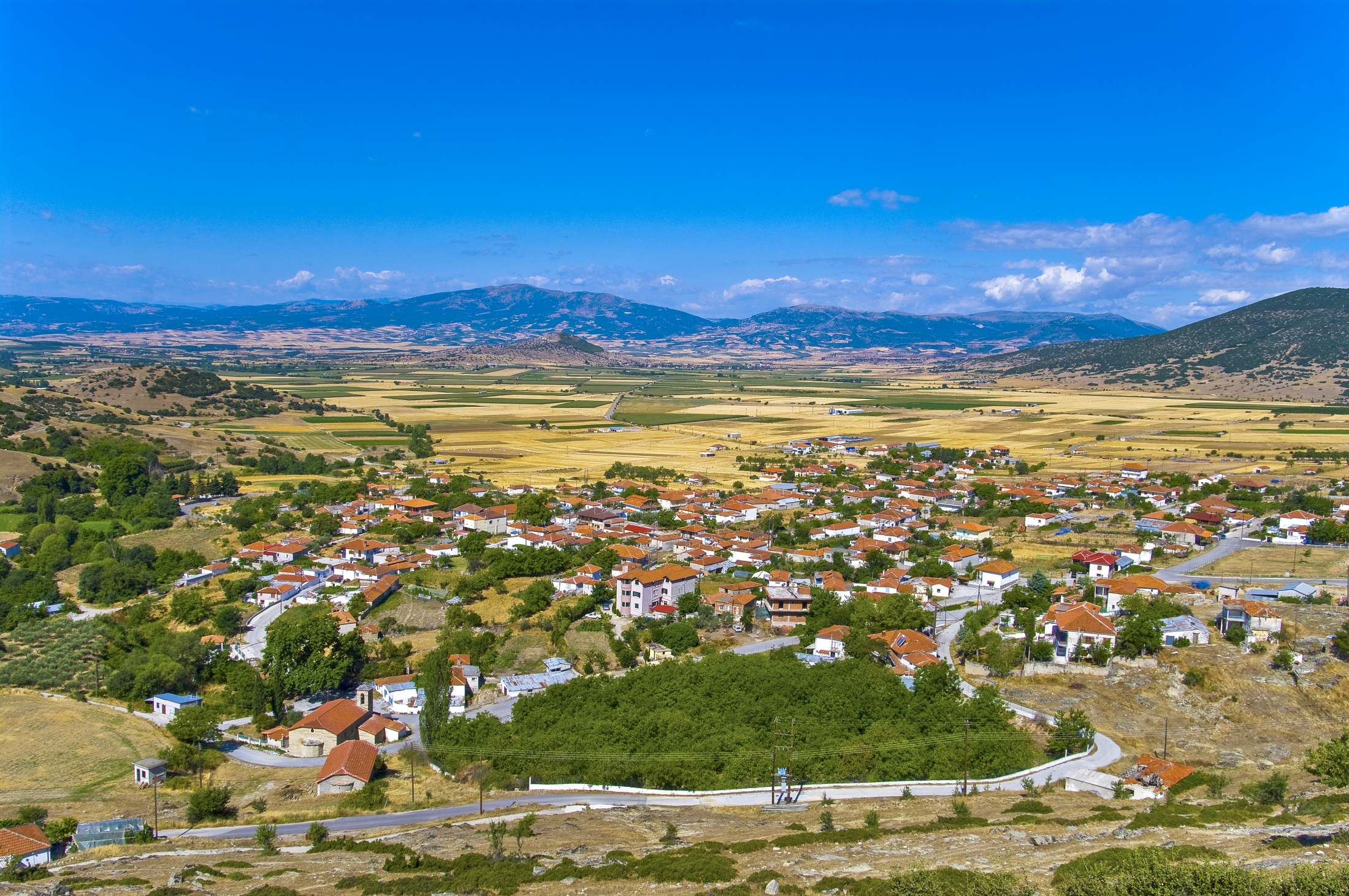
The village of Pythio is built in the western part of Olympus’s foothills. A political and religious center for the Perraivians, it was, also, one of the three cities forming the Perraivian Tripolitida.
Tsaritsani
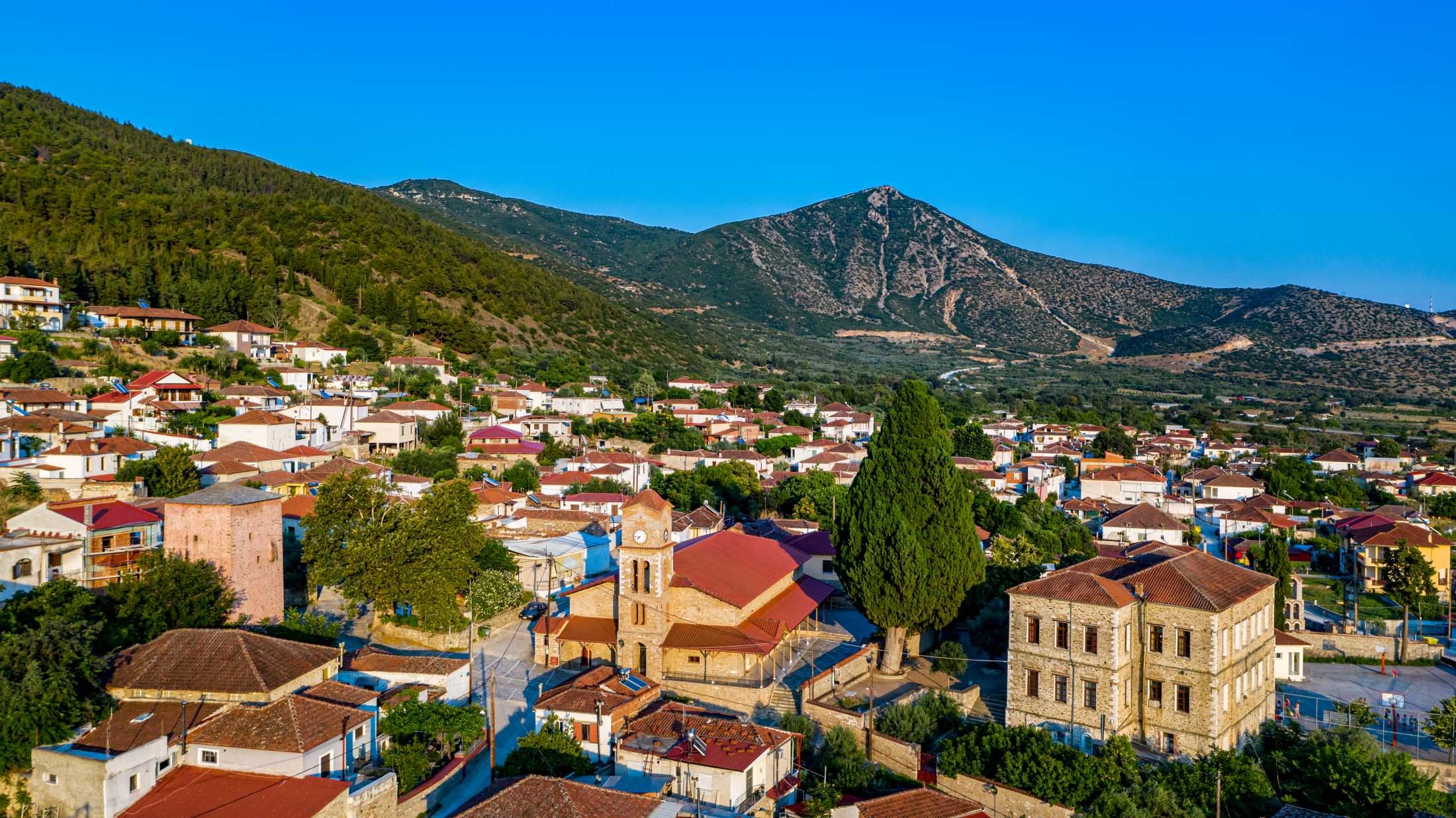
In the plain of Elassona and at a short distance from the town, we come to Tsaritsani that is famous for its greatness in the arts and letters. It reached its peak development in 1750 to 1830, when its residents became involved in red-cotton dying and silk farming.
The village is split down the middle by the Xairias stream and there is a bridge connecting its two parts. The large building, behind the statue of the teacher of the nation and benefactor of Tsaritsani, Konstantinos Oikonomou Ex’ Oikonomon, is the Oikonomios School that was built in 1910 on the ruins of his home.
Domeniko
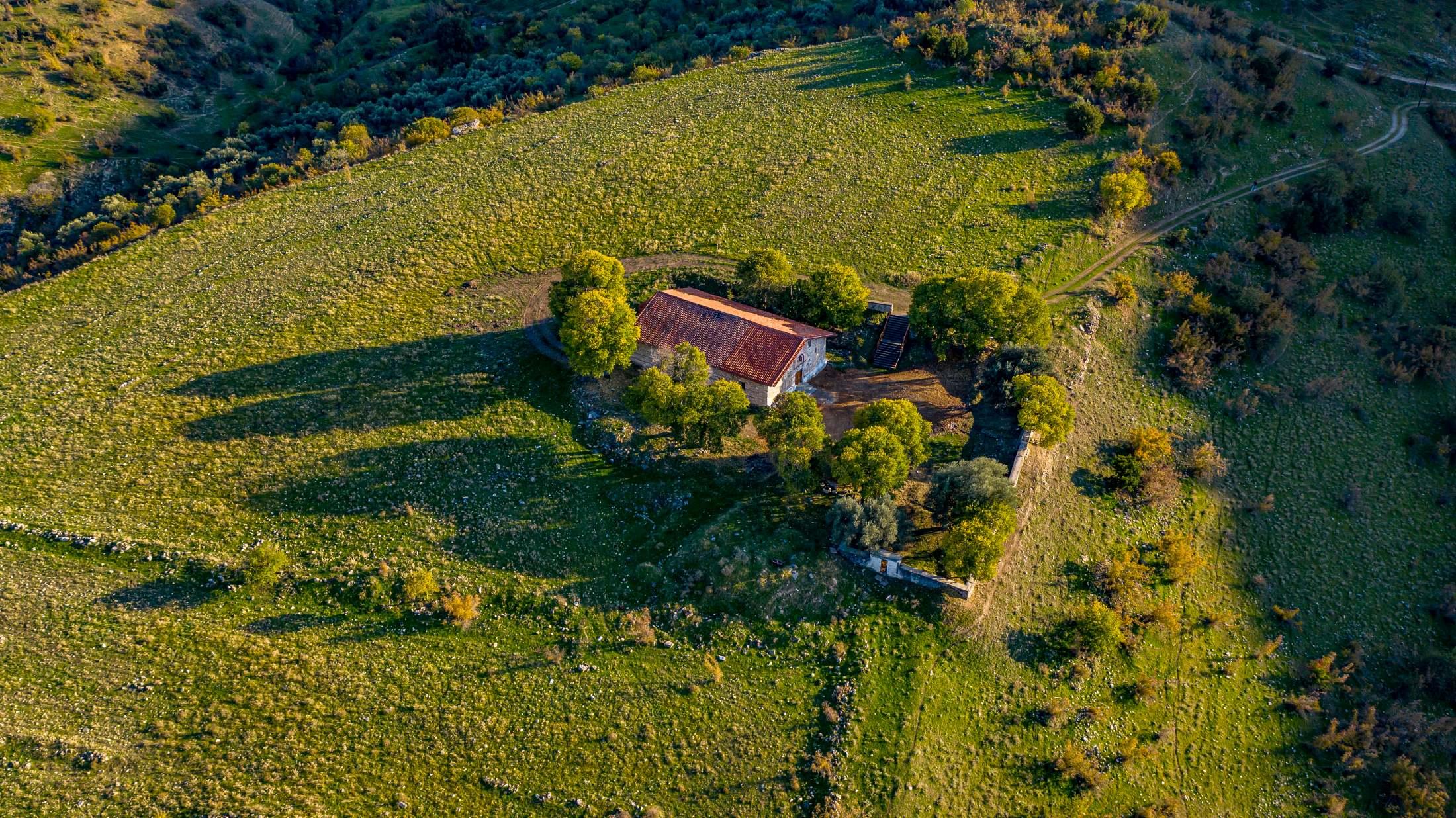
Domeniko, a lively settlement in the municipality of Elassona, is located in a semi-mountainous area west of the Titarisios river and retains its strong historical and religious character. It is one of the official martyr villages of Greece, as in February 1943 it was the site of executions and arson by German occupation troops, with dozens of civilians losing their lives and most of the settlement being destroyed. The religious landscape of the village is also particularly rich. The central church is Agios Georgios, an important post-Byzantine church with remarkable frescoes and architectural features. According to the Ministry of Culture, it is a characteristic example of 17th-century ecclesiastical architecture in Thessaly. Just outside the village, in a cool natural landscape with plane trees and mulberry trees, stands Panagia Vryzostis (dated 1607–1611), with a magnificent view of the Potamia plain. Next to it are the ruins of an old watermill, reminding us of the importance of the area for local agricultural production.
Kokkinopilos
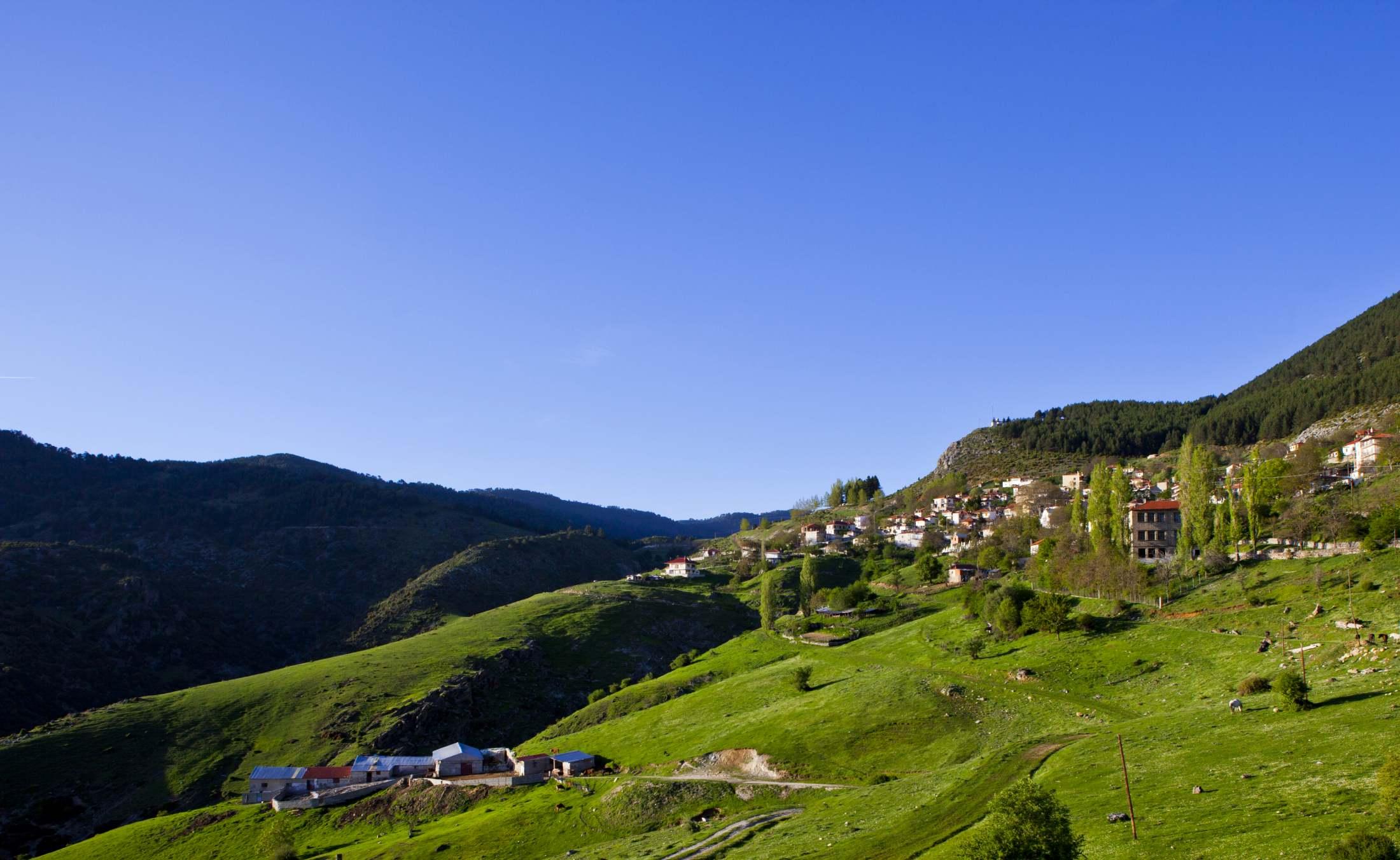
The village Kokkinoplos or Kokkinopilos has become a holiday and relaxation spot, since it is the highest village on Olympus. It has an altitude of 1150m and its stone-built houses hanging from the mountain slopes create an impressive setting. Its name is linked to kokkinochoma (= red soil), which is an important substance for the village. Due to the region’s particular soil consistency, the local people are involved in the production of lime, apart from stock-breeding, wood-cutting and farming.